
From Data to Action: KEYSTONE Final Event Featuring Sister Project SETO Held at TRA 2026
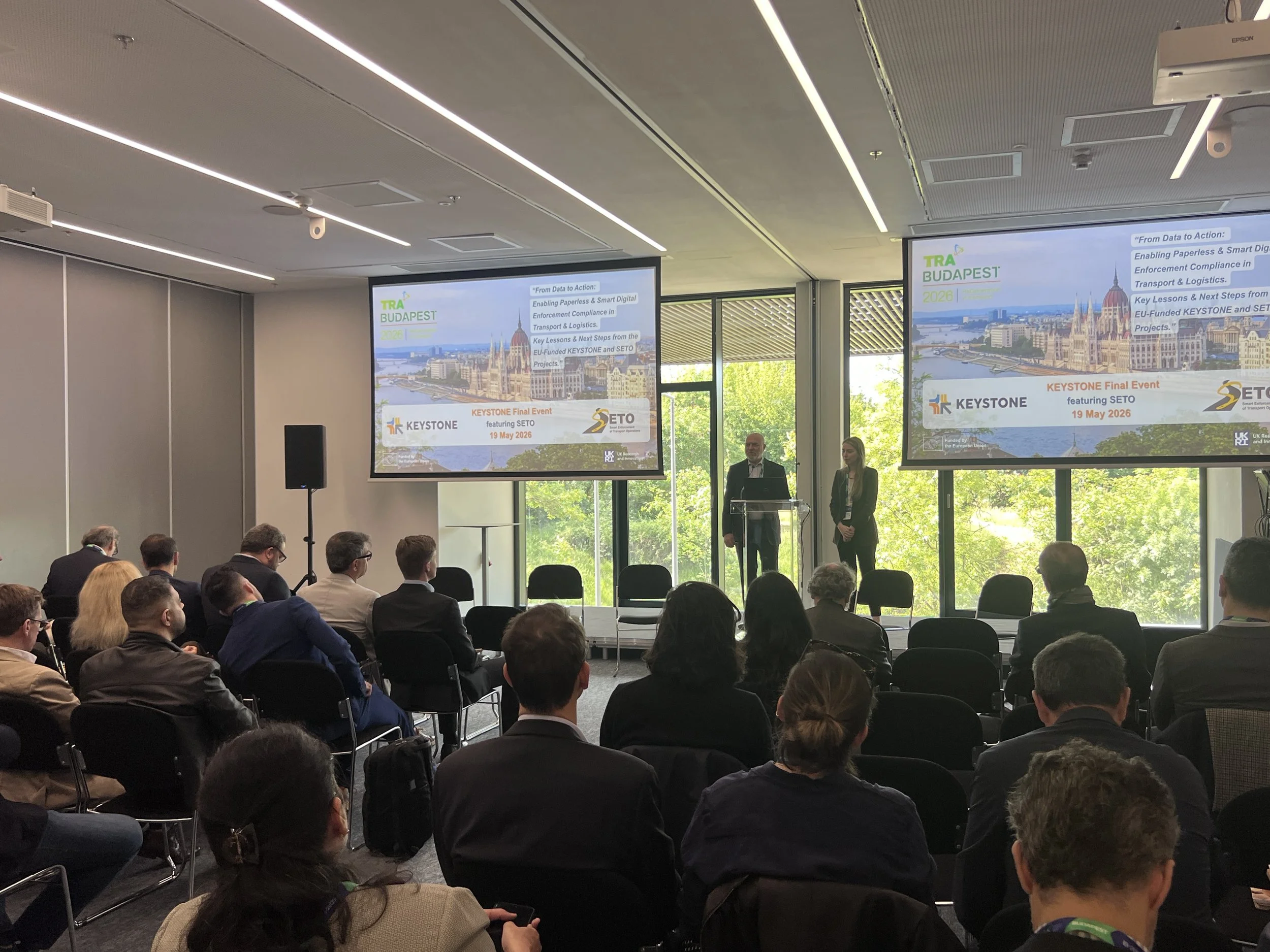
Project Coordinators Mauro Dell’Amico (ICOOR-UNIMORE, KEYSTONE) & Beatriz Martínez Pastor (UCD, SETO) delivering the welcome remarks to participants at the KEYSTONE Final Event ft the SETO Project.
On 19 May 2026, the KEYSTONE project successfully celebrated its conclusion with a dedicated final event within the TRA 2026 conference in Budapest, Hungary.
The event, “From Data to Action: Enabling Paperless and Smart Digital Enforcement Compliance in Transport & Logistics - Key Lessons and Next Steps from the EU-Funded KEYSTONE and SETO Projects”, featured insights from external experts, including KEYSTONE’s sister project SETO and gathered over 75 participants, including project partners, economic operators, researchers, and enforcement authorities who explored the milestones, achievements and lessons learned from the two EU-funded initiatives.
Dr Mauro Dell’Amico, Professor of Operations Research at the University of Modena and Reggio Emilia (UNIMORE) and Coordinator of the KEYSTONE project, along with Dr Beatriz Martínez Pastor, Assistant Professor at University College Dublin (UCD) and Coordinator of the SETO project, welcomed all participants and presented an overview of both EU-funded initiatives. They highlighted the importance of cooperation for a more digitised, paperless, sustainable, less complex and smarter future for transport and logistics operations in Europe.
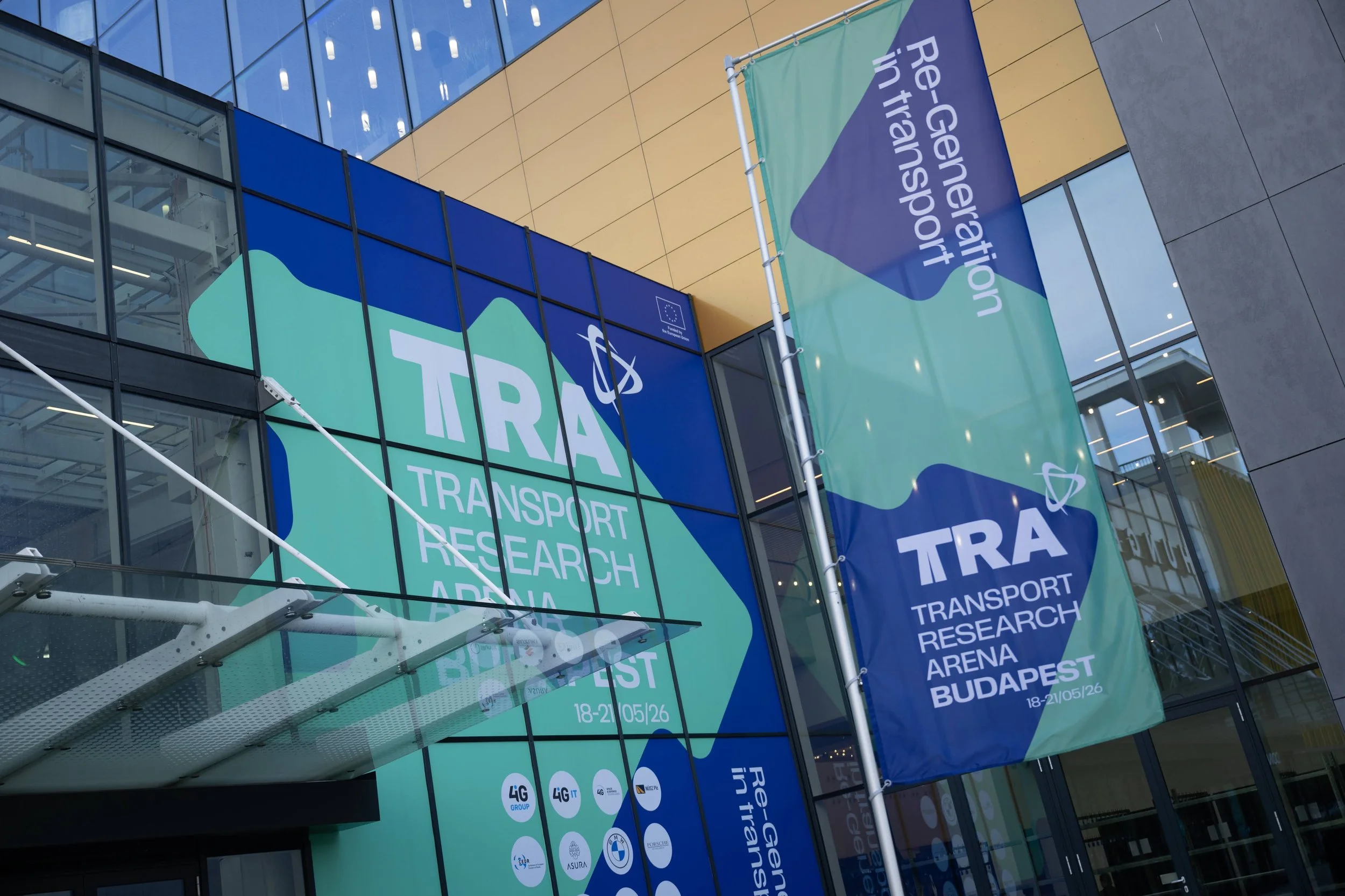
The KEYSTONE Final Event featuring the SETO Project took place within TRA 2026 in Budapest, Hungary
Following this, the keynote experts of the event shared their insights on digitisation, innovation and compliance in Europe. Dr Eusebiu Catana (ERTICO-ITS Europe) focused on the importance of creating a European Transport & Logistics Data Space built on interoperability, governance and trusted data exchange, highlighting that the fragmentation of systems remains one of the key challenges in Europe. Following, Rémy Russoto, Organisations in Road Transport Enforcement (CORTE), highlighted the unmet need of enforcement authorities for reliable, real-time and standardised data to enable smarter, more efficient and transparent roadside inspections. Finally, Emanuele Pugliese (Circle Group) emphasised that the upcoming eFTI regulation should be seen not only as a compliance requirement, but also as an opportunity to improve operational efficiency and accelerate the transition towards paperless logistics.
The keynote session provided important takeaways on how a data space-driven approach, such as the one followed in both EU initiatives, can transform regulation from a bottleneck into an enabler and set the tone for the following panel discussions.
Panel I, “Enabling Operators and Enforcement Authorities to Work Seamlessly Together”, delved into the challenges and barriers, such as fragmented systems and complex data exchange across various systems and countries, and explored how EU initiatives like KEYSTONE and SETO can contribute towards a digitalised freight ecosystem built on trust, common standards and transparent enforcement compliance. Zoe Petrakou (AETHON Engineering) presented the KEYSTONE API methodology as a plug-and-play solution connecting eFTI, eCMR, telematics and enforcement systems through interoperable and GDPR-compliant interfaces. She highlighted how the API standard acts as a “digital handshake for freight”, reducing integration complexity while enabling secure real-time data exchange between stakeholders.
Jesús Martínez Cuadrado (Etelätär Innovation) presented the KEYSTONE Web App, developed with three dedicated interfaces providing a single entry point to access digitised logistics operations, combined with standardised data connectivity to current and future databases. He further demonstrated how the Web App supports port authorities, road police and drivers through real-time traffic monitoring, risk-based inspections and digital document sharing, contributing to seamless and more efficient enforcement operations. Representing SETO, Eugene O’Brien (University College Dublin) and Sasa Klopanovic (Mainflux Labs) showcased how smart enforcement technologies, including Weigh-in-Motion systems, blockchain-secured platforms and role-based digital interfaces, can support real-time multimodal monitoring, improve cross-border enforcement cooperation and reduce reliance on fragmented and paper-based processes.
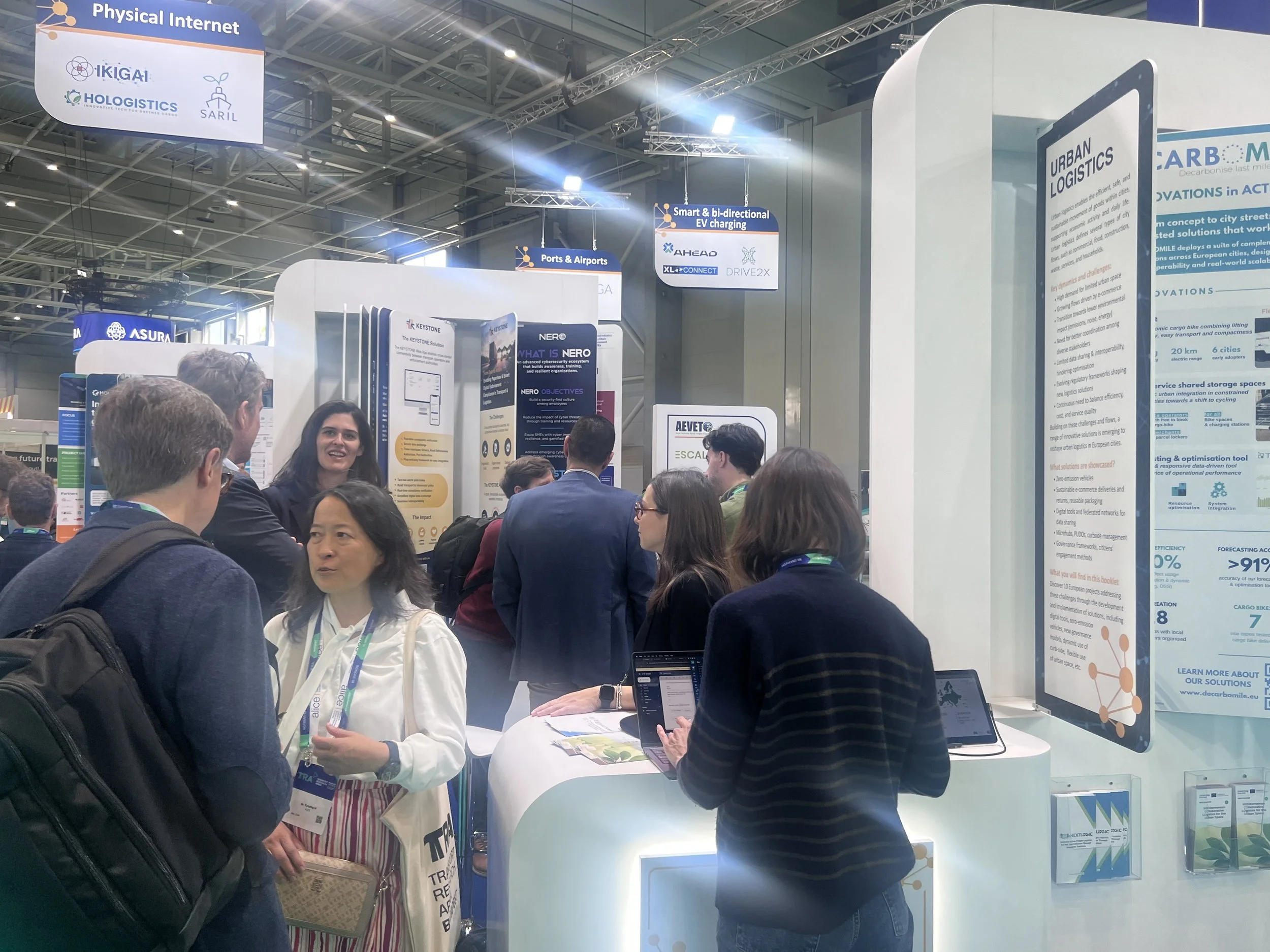
KEYSTONE Booth within the ALICE Logistics Innovation Village at TRA 2026
Panel II, “What Works, What Doesn't: Lessons from the Pilots”, subsequently presented the lessons learned from the real-life pilots conducted within both projects. From the KEYSTONE side, Fabrizio Borgogna (GRUBER Logistics) explained that one of the major achievements of the road pilot at the Port of La Spezia was proving that data can be inserted only once and then reused securely throughout the logistics chain, reducing redundancy and improving operational efficiency. He also stressed that interoperability between all IT systems involved was essential for achieving eFTI readiness and serving as a baseline for upcoming mandatory eFTI compliance. The road transport pilot revealed a 40% reduction in gate check-in time, 100% document digitisation and more than 95% ETA accuracy.
Massimo Arnese (CIM Novara) focused on the intermodal pilot between Novara and Rotterdam and explained how end-to-end corridor visibility can support enforcement authorities in monitoring complex rail-road transport flows in real time. He showcased how selective inspections and shared multimodal data can reduce unnecessary checks, congestion and operational delays. The intermodal pilot resulted in a 50% reduction in inspection time, a 35% increase in inspection performance and 100% real-time ITU traceability, meaning less time needed to inspect a truck and a significant reduction in workload.
Both KEYSTONE pilot leaders stressed that KEYSTONE successfully demonstrated the importance of standardised APIs and plug-and-play integration approaches for connecting heterogeneous systems across the logistics ecosystem. From SETO’s side, Dirk Staelens (VIL – Flanders Institute for Logistics) highlighted that collaborative and data-driven enforcement models can improve transparency and reduce unnecessary roadside inspections, while Bernard Jacob (Université Gustave Eiffel) emphasised the need for harmonised Weigh-in-Motion (WIM) systems and EU-wide certification procedures to support fair competition, infrastructure protection and safer roads.
Panel III, “Beyond SETO & KEYSTONE, Smart Transport Solutions for the Future”, focused on the next steps beyond the projects’ conclusion and on how the legacy of both projects can be transformed into scalable, real-world solutions by examining the business cases, social acceptance figures, and how data sharing and interoperability can improve the efficiency of the logistics chain. Fabrizio Camisetti (RINA) presented the KEYSTONE business case analysis, highlighting that digital freight solutions can generate long-term economic benefits through reduced waiting times, lower fuel consumption and less manual data entry. Following this, Dr Alexeis Garcia-Perez (AGIM) stressed that future smart transport systems will require strong governance frameworks ensuring transparency, accountability, fairness and cybersecurity alongside technological interoperability, as the first-year consultation has shown in KEYSTONE. Within the SETO discussions, Miguel Casero Flórez (University College Dublin) highlighted how smart enforcement solutions based on data integration, Weigh-in-Motion systems and interoperable digital platforms can improve efficiency, reduce administrative burden and support more effective cross-border transport operations. Riccardo Laterza (Institute of International Sociology of Gorizia) focused on the social acceptance of digital enforcement technologies, highlighting that while 64.8% of surveyed drivers agreed that technology improves safety, and 62.1% reported regularly using GPS systems.
Overall, the event sparked strong audience engagement, with participants actively contributing to all panels through questions and discussions.
Throughout the TRA 2026 conference, KEYSTONE was also present in the Digital & Cross-Cutting Innovation thematic area, within the ALICE Logistics Innovation Village, where the project showcased its results and innovations to the audience.
Throughout these three years, KEYSTONE demonstrated how interoperable digital solutions, real-time data exchange and smarter enforcement compliance can support the transition towards a more connected, paperless and efficient European freight transport sector. Finally, the cooperation between both projects strongly highlighted the importance of collaboration in shaping a fairer, more transparent, sustainable and effective transport and logistics ecosystem.
The proceedings and pictures of the event are now available.