


The KEYSTONE project has successfully completed a series of pilot activities demonstrating how trusted, real-time data sharing can improve freight transport operations across Europe. Conducted in operational environments at the Port of La Spezia and the Novara intermodal terminal, the pilots showed that digital interoperability can support smarter enforcement, reduce administrative burden, and pave the way for more efficient and sustainable transport corridors.
Rather than testing digital solutions in controlled environments, KEYSTONE pilots were carried out in real transport operations involving ports, logistics terminals, trucks, drivers, logistics operators, and enforcement authorities. Their objective was to answer a fundamental question: Can authorities verify compliance more efficiently while reducing unnecessary interruptions to transport operations?
The results suggest that they can.
Bringing Digital Compliance to Real Operations
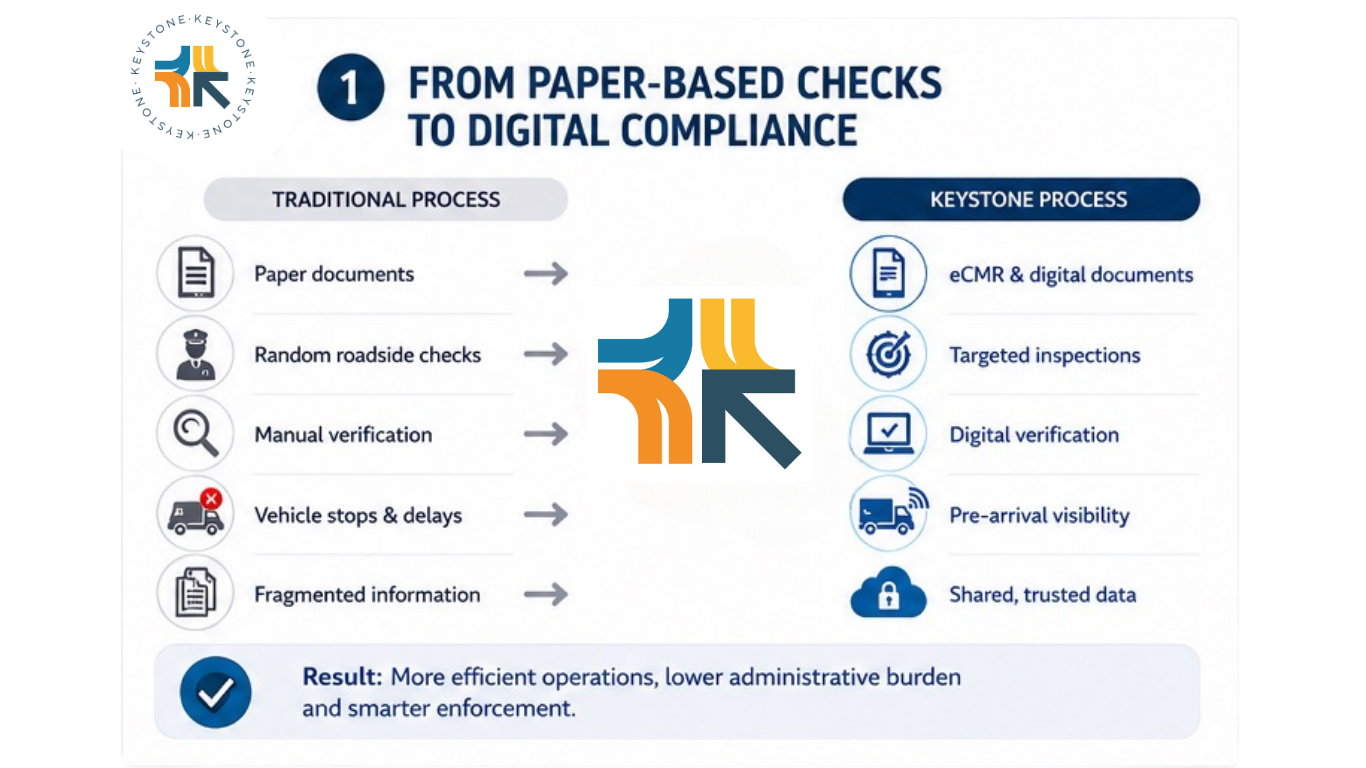
KEYSTONE was created to support a more connected and trusted freight transport ecosystem by enabling seamless information exchange between logistics operators and public authorities. The project aims to replace fragmented information flows, paper-based documentation, and resource-intensive roadside inspections with secure, real-time access to transport data.
The pilots demonstrate how this vision can be applied in practice, allowing authorities to access relevant information before a vehicle is stopped while reducing the administrative burden placed on operators and drivers.
A Milestone Journey: La Spezia to Bologna
The first pilot focused on road freight transport operations linked to the Port of La Spezia, one of Italy's most important maritime gateways. Through integration between a logistics operator's Transport Management System and the KEYSTONE platform, transport information, including vehicle details, shipment data, and Estimated Time of Arrival (ETA), was shared in real time with relevant authorities.
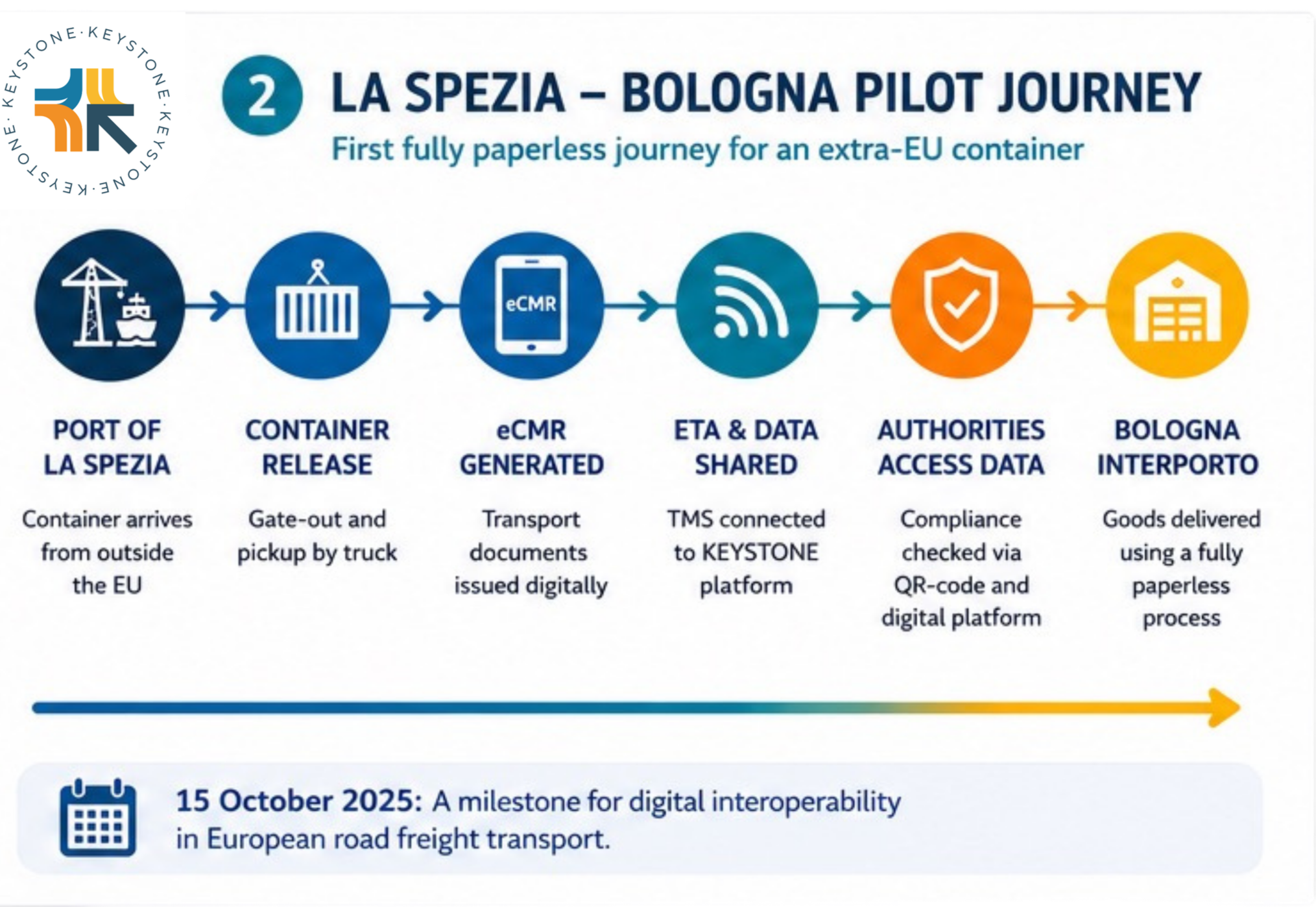
A key component of the pilot was the use of the electronic consignment note (eCMR), enabling transport documents to be generated, exchanged, and verified digitally.
On 15 October 2025, KEYSTONE achieved a significant milestone when a container arriving from outside the European Union was transported from the Port of La Spezia to Bologna Interporto using a fully paperless process. ETA information, transport documentation, and compliance data were exchanged exclusively in digital form, allowing authorities to verify the shipment through secure digital channels and QR-code access without relying on paper documentation.
The pilot demonstrated that digital interoperability is not only technically feasible but operationally viable within real freight transport corridors.
Extending Digital Interoperability to Intermodal Transport
The second pilot was carried out at the Novara intermodal terminal, a strategic logistics hub connecting international rail freight corridors with the Italian road network. By connecting terminal operating systems with the KEYSTONE platform, the pilot enabled the exchange of both predictive and operational data, including expected train arrival times, vehicle information, and cargo details.
This information was made available through a dedicated web application accessible to terminal operators, drivers, and enforcement authorities. The pilot demonstrated how authorities can perform more targeted and risk-based controls by accessing reliable information before vehicles leave the terminal. Instead of relying exclusively on random roadside inspections, authorities were able to identify potential issues in advance and focus resources where they were most needed. For logistics operators and drivers, the result was improved predictability and fewer unnecessary disruptions to transport operations.
Building Trust Through Real-Time Data Sharing
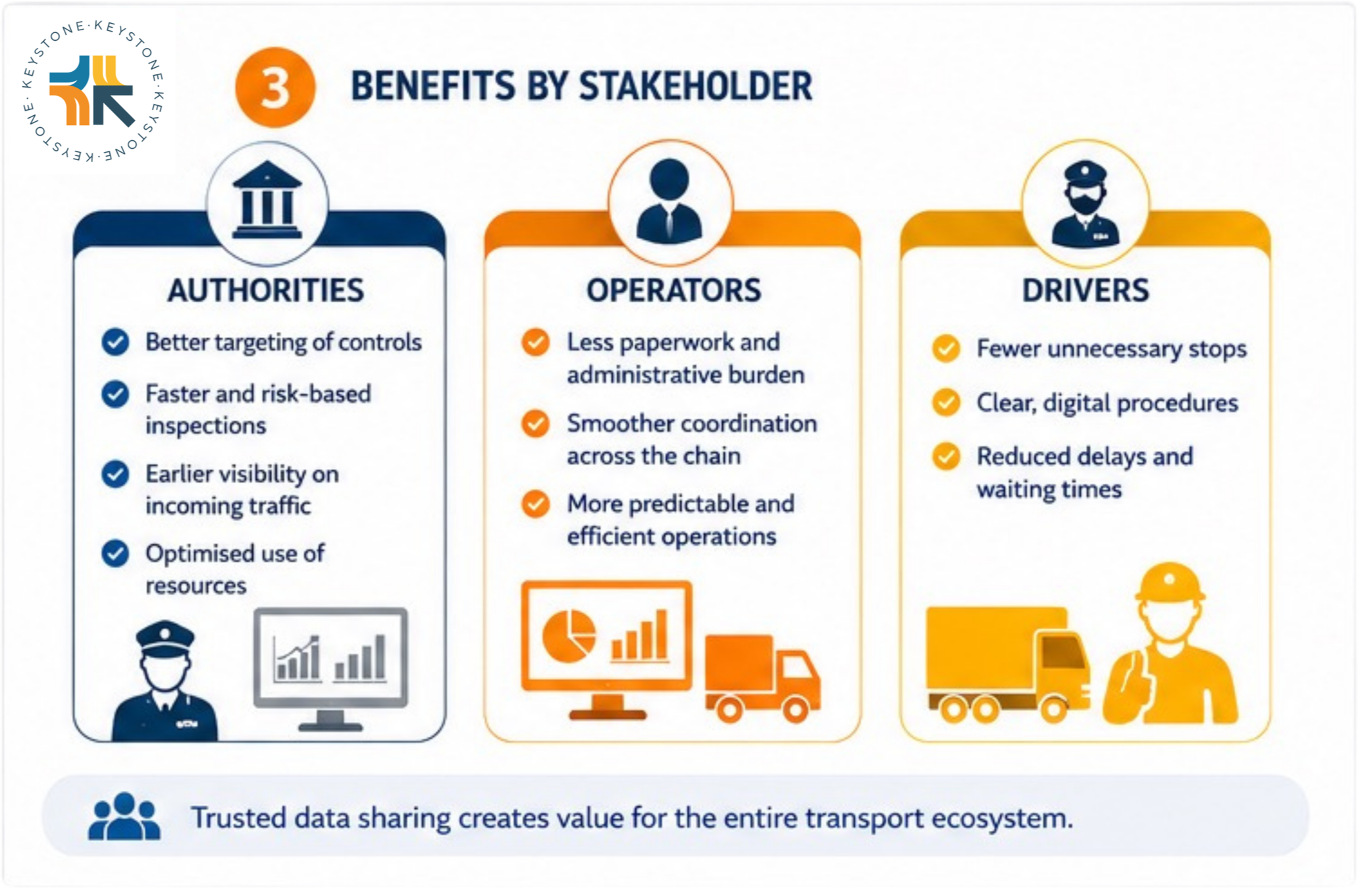
Although conducted in different operational environments, both pilots addressed the same challenge: enabling trusted data exchange between private operators and public authorities.
The pilot activities demonstrated the practical value of interoperability between transport management systems, terminal operating systems, digital consignment notes, and public digital infrastructures. By providing access to reliable information in advance, authorities were able to prepare and perform controls more efficiently, while logistics operators benefited from improved coordination and reduced administrative burden. The pilots also reinforced an important principle: digitalisation does not reduce control. On the contrary, access to trusted and timely information can support more effective enforcement while reducing unnecessary interventions.
A Blueprint for Europe's Digital Transport Corridors
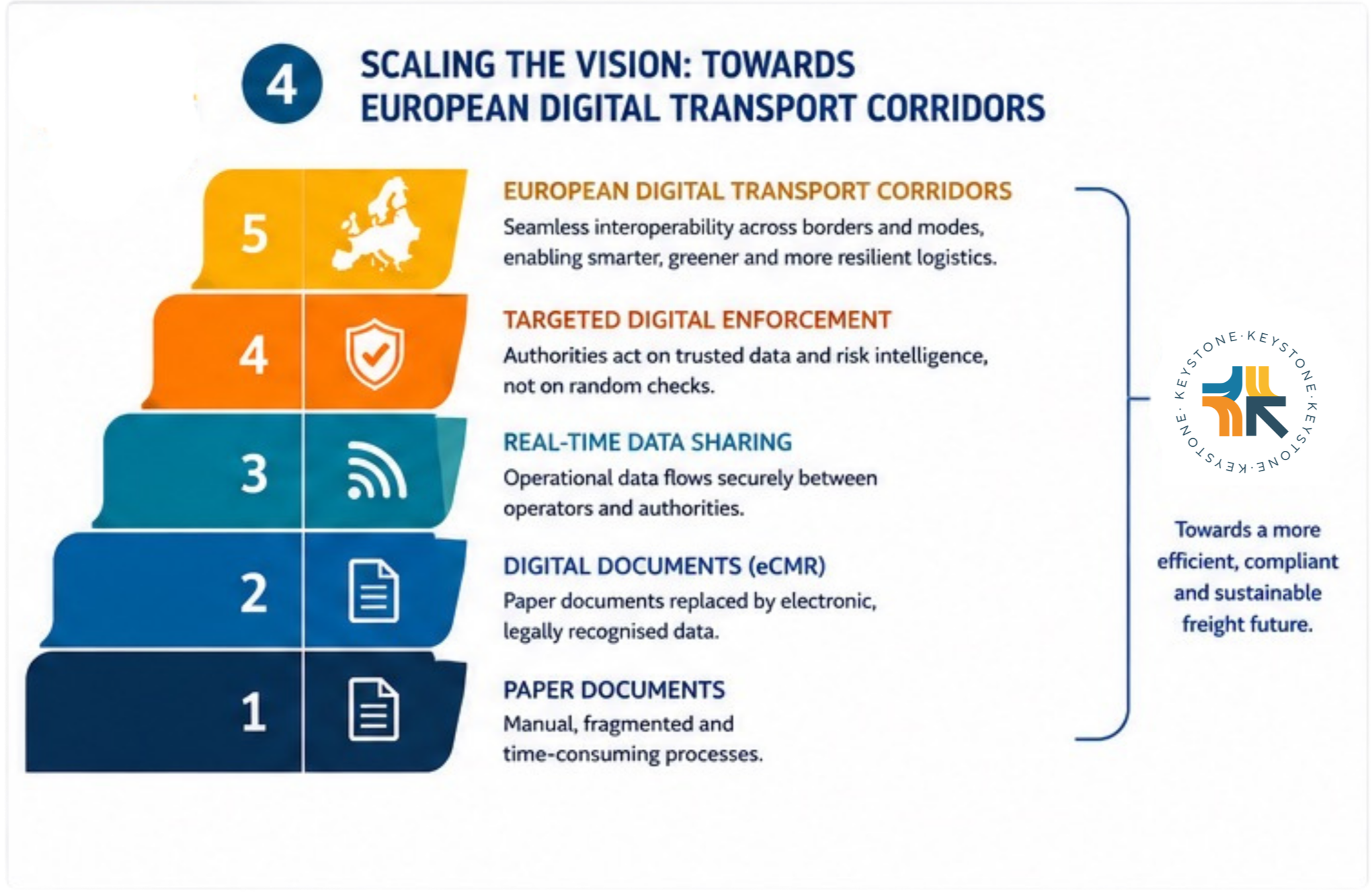
The KEYSTONE pilots represent more than a technical demonstration. They provide a practical blueprint for the future of digital freight transport in Europe.
By validating digital solutions in real operational settings, the project has shown how interoperability can support safer roads, more efficient logistics operations, and better use of public resources. At the same time, the pilots highlighted the importance of trust, cooperation, and organisational alignment in achieving large-scale adoption.
The experience gained through La Spezia and Novara confirms that the transition towards interoperable, data-driven freight transport is already underway. The next challenge is scaling these solutions across Europe, aligning processes, incentives, and digital rules to enable wider deployment.
As Europe continues its journey towards smarter and more sustainable mobility, the KEYSTONE pilots demonstrate that digital compliance and trusted data sharing are no longer future concepts—they are operational realities.