

From Research to Real-World Impact: What the KEYSTONE Project Achieved in Digital Transport Compliance
The EU-funded KEYSTONE project has unveiled a web application designed to simplify cross-border logistics compliance by enabling the digital exchange and verification of operational and compliance data across transport networks.
Throughout its lifespan, the KEYSTONE project has developed and validated an interoperable digital solution, the KEYSTONE Web App, helping logistics and transport operators, as well as enforcement authorities, to exchange and verify operational and compliance-related data digitally.
What the KEYSTONE Web App does
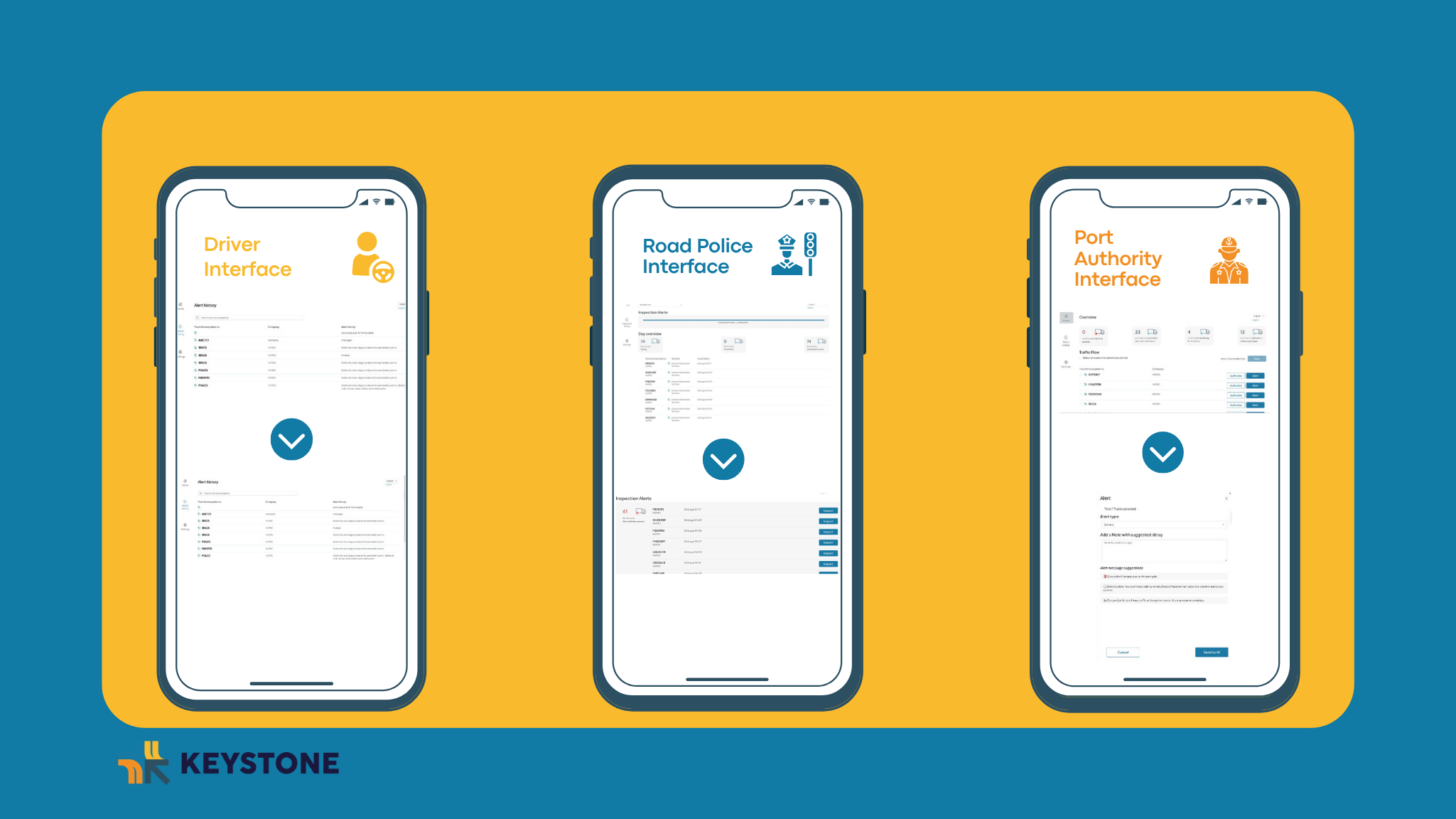
KEYSTONE’s web app is built around three dedicated interfaces for: a) drivers, b) road enforcement authorities, and c) port authorities, each tailored to different operational needs.
The three interfaces
The Driver view provides estimated arrival times, delay alerts, and transport data, while the enforcement interface supports document review, compliance validation, and QR code verification. The Road Enforcement Authority Interface supports compliance checks by providing access to verified operational and transport-related data. Finally, the Port Authority Interface gives officials real-time visibility into scheduled truck arrivals and departures, congestion, and access points. It also allows authorities to send messages to drivers during disruptions and to create fast lanes for vehicles that have already been fully validated in the system.
Pilot testing in Europe
The platform was tested in two real-world pilots: a road transport pilot between the Port of La Spezia and the Bologna Freight Village, and an intermodal pilot spanning the Port of Rotterdam, the Rhine–Alpine rail corridor, and the Novara terminal. According to the project, the road pilot demonstrated the electronic sharing and signing of eCMRs, while the intermodal pilot validated the integration of real-time rail data with terminal operations and control procedures.
Why it matters
The KEYSTONE Web App can harmonise operations by helping operators better predict demand and, at the same time, improve inspection efficiency for enforcement authorities, reducing the administrative burden for all stakeholders involved.
KEYSTONE is an example of how research and innovation can support more interoperable and digital transport enforcement procedures across Europe, highlighting how EU initiatives can foster digitalisation and interoperability in the European transport arena.
Watch the video to discover how KEYSTONE is turning digital innovation into practical solutions.
Author: Eftychia Koliou, Smart Transportation Alliance (STA)