

Digital Data Exchange Between Logistics Terminals and Public Enforcement Authorities: Insights from the CIM Intermodal Pilot
Pilot Site Description
The CIM-Novara Interport was selected as the intermodal pilot site as it represents one of the main logistics hubs in north-west Italy. Approximately 85% of the terminal’s traffic operates along the Alpine Rhine-Corridor, a core part of the Trans-European Transport Network (TEN-T), connecting multiple European countries. In addition, the terminal is located close to the A4 Turin–Milan motorway, making it a strategic entry point for goods arriving from abroad into Italian territory.
Pilot Structure
The pilot aims to test an interoperable data exchange system between a railway terminal and public enforcement authorities. The objective is to enable road control officers to access relevant operational and compliance-related information before vehicles leave the terminal and are stopped on the road.
The pilot was implemented at the Novara Terminal, managed by CIM SpA, and involved a total of 20 checks carried out by the beginning of November. To support data access for all involved actors, the KEYSTONE project developed a web application that collects and displays data related to goods, drivers, and vehicles.
Data Ownership and Logistics Flows
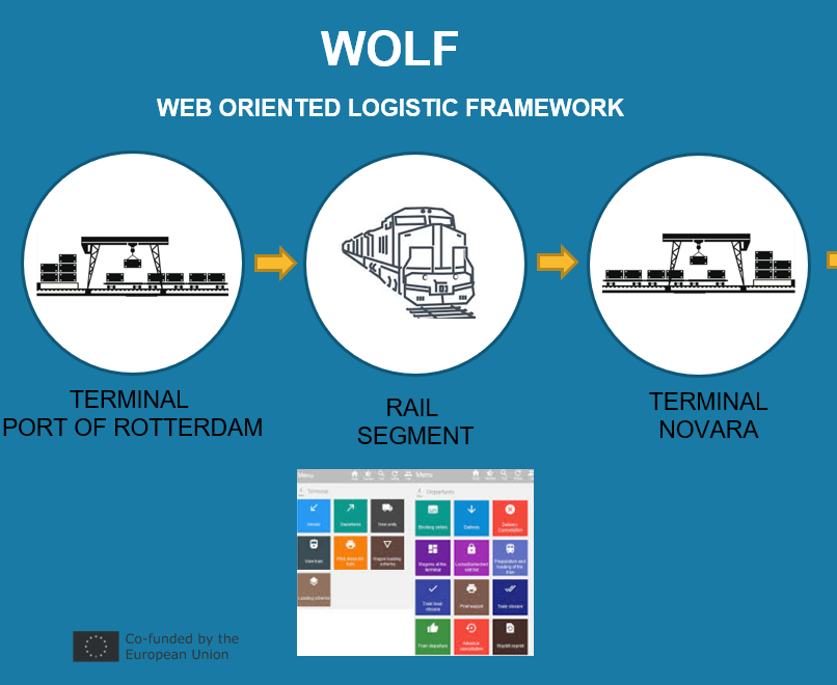
WOLF is the terminal flow management platform developed by the Hupac Group. Through this system, the Novara Terminal has access to both planned and real-time data related to railway traffic arriving from the Rhine–Alpine Corridor. When loading units are transferred from rail to road, the relevant data is made available to public authorities through the KEYSTONE digital infrastructure.
Process Model
Trains depart from the Port of Rotterdam terminal towards the Novara Terminal. The departure status is generated by the port system and transmitted to the CIM Terminal Operating System (TOS). Based on the agreed timetable, the expected arrival time at the Novara Terminal is calculated.
In the event of delays or disruptions during the journey, updated Estimated Time of Arrival (ETA) messages are generated and transmitted to the terminal. This enables the terminal to adjust operational planning, allocate resources efficiently, and organise delivery schedules for last-mile transport.
Actors Involved
The following actors participated in the pilot:
Combiconnect Srl: management company of the Novara Terminal
Hupac SA: developer of the Terminal Operating System (TOS)
Spitz Trasporti Srl: road transport operator responsible for collecting loading units
Carabinieri Station of Novara: public enforcement authority carrying out roadside checks
Tested Use Case
Upon departure from Rotterdam, data related to the composition of wagons and loading units is generated and transmitted to the Novara Terminal. This data represents a forecast of arrival based on the agreed railway transport plan.
During the journey, any changes affecting the train’s progress generate updated ETA information, which is transmitted to the terminal. This allows the Novara Terminal to plan unloading operations and organise the allocation of loading units to drivers for last-mile delivery.
Once the train arrives at the Novara Terminal, loading units are unloaded and assigned to drivers. The drivers then exit the terminal to deliver the goods to their final destinations.
During this process, the terminal operating system transmits outgoing vehicle data to the KEYSTONE platform via a standardised API. This information is displayed through a web application installed on tablets used by law enforcement authorities. Through role-based access, officers can view all outgoing vehicles scheduled for the day.
Enforcement Checks and Monitoring
For the Novara pilot, the Carabinieri of Trecate collaborated in testing the application by accessing:
Driver-related data
Loading unit information
Commodity details
In parallel, the web application also displayed compliance-related data, including driving licence validity, transport authorisations, tachograph status, and vehicle compliance information.
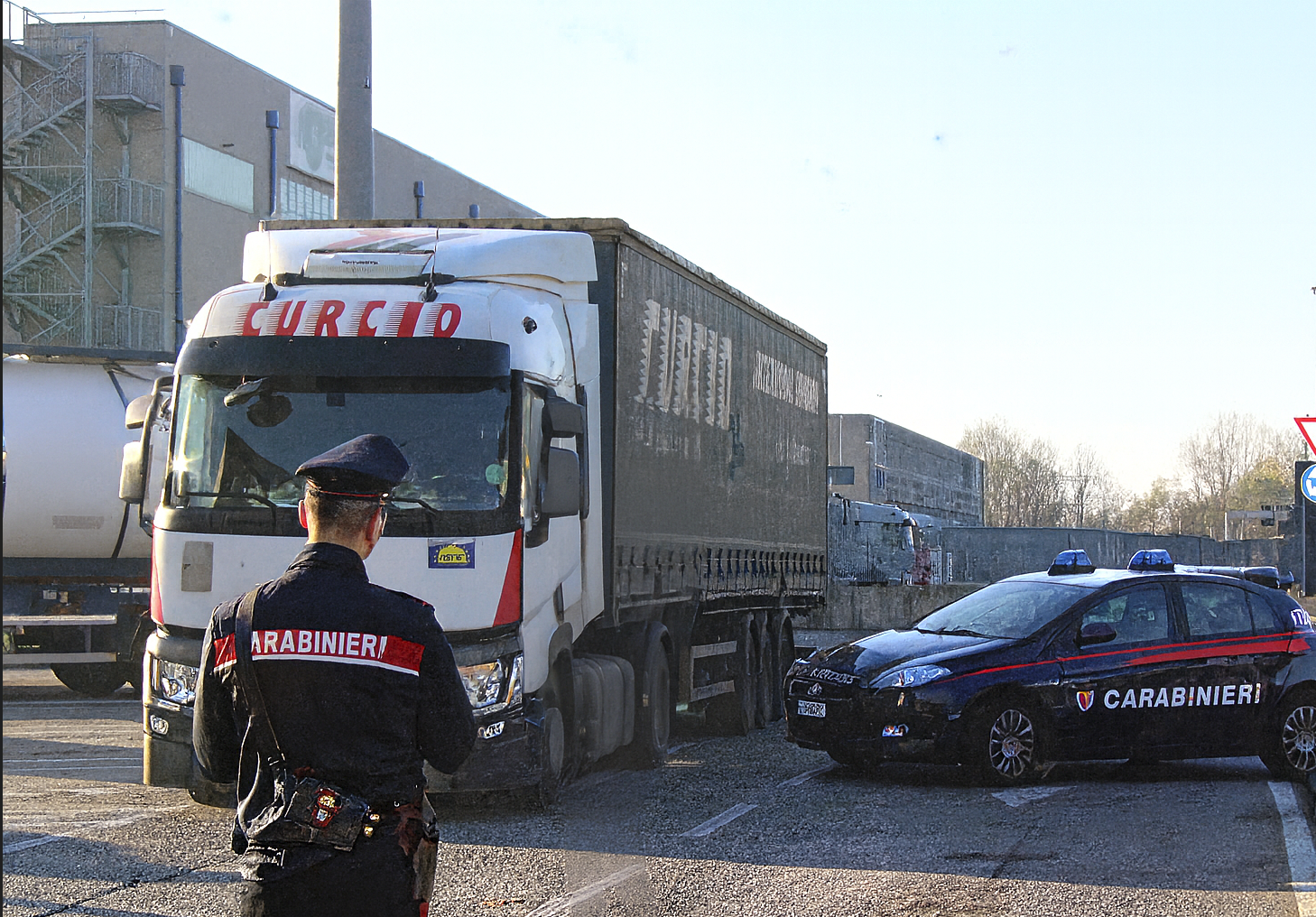
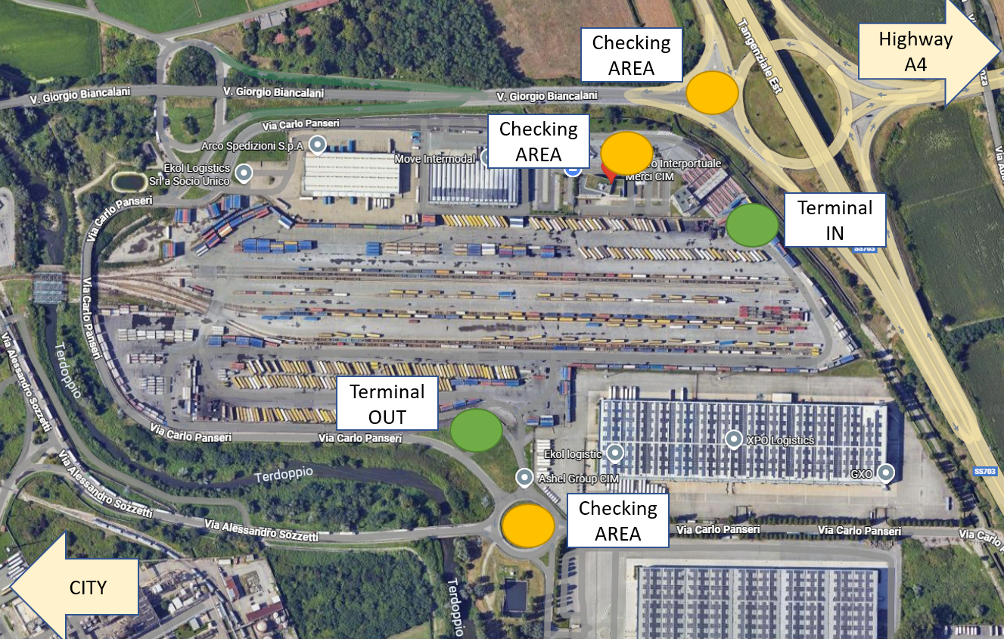
Based on the available data, officers were able to assess whether vehicles required further inspection. Checks were carried out near the terminal gate and at selected locations close to the A4 motorway and the terminal exit towards the city of Novara.
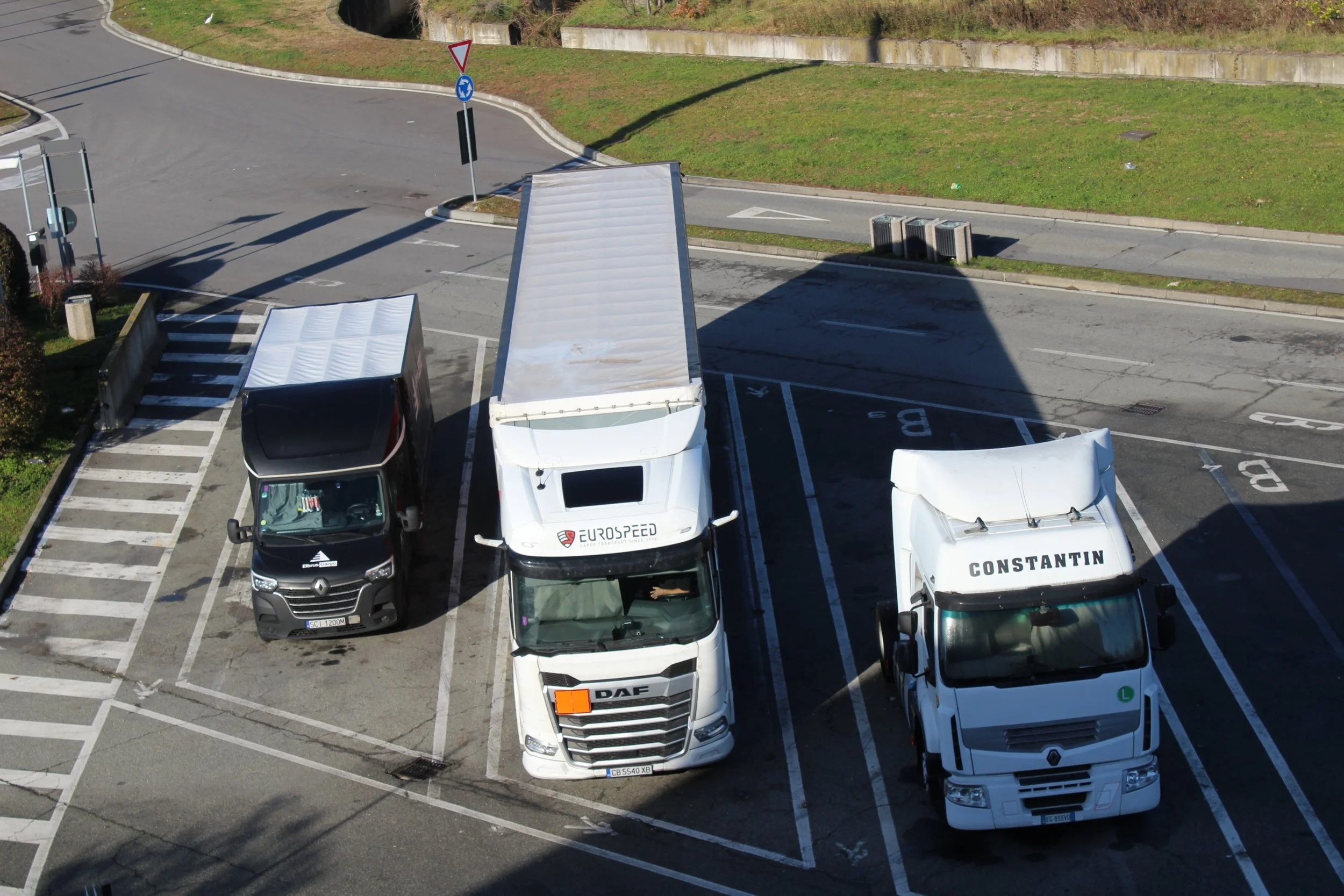
Italian enforcement authority monitoring terminal operations during the CIM intermodal pilot
During monitoring activities conducted between September and November 2025, a total of 14 vehicles leaving the terminal were examined. Of these, four vehicles were stopped for inspection. In two cases, non-critical irregularities related to goods were identified in advance through the web application, and no further in-depth checks were required.
Supporting Technological Infrastructure
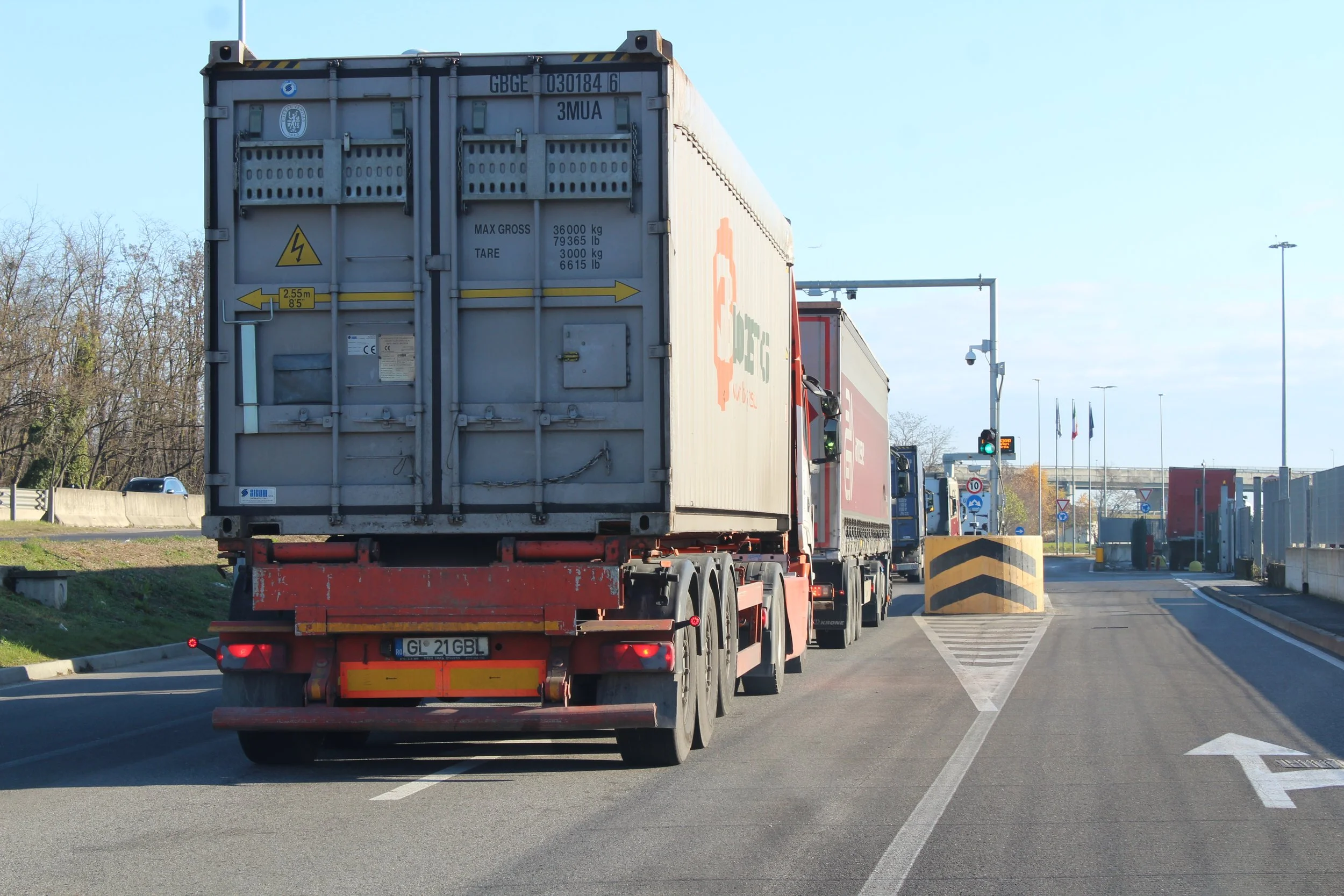
The terminal relies on multiple technological systems to support the pilot. Vehicles are identified through OCR portals that read licence plates and loading unit codes and transmit the data to the terminal operating system at each entry and exit. All vehicle movements are recorded in real time and shared with the KEYSTONE platform.
Data received by the TOS is verified and validated based on collection and delivery reservations exchanged between the terminal and road operators. This ensures data accuracy and authenticity before transmission to external systems.
Driver identification is carried out at the terminal gate through verification of access authorisations, driving licences, and collection or delivery reservations. Only authorised vehicles are granted access to the terminal yard to collect loading units arriving by rail.
The KEYSTONE Web Application
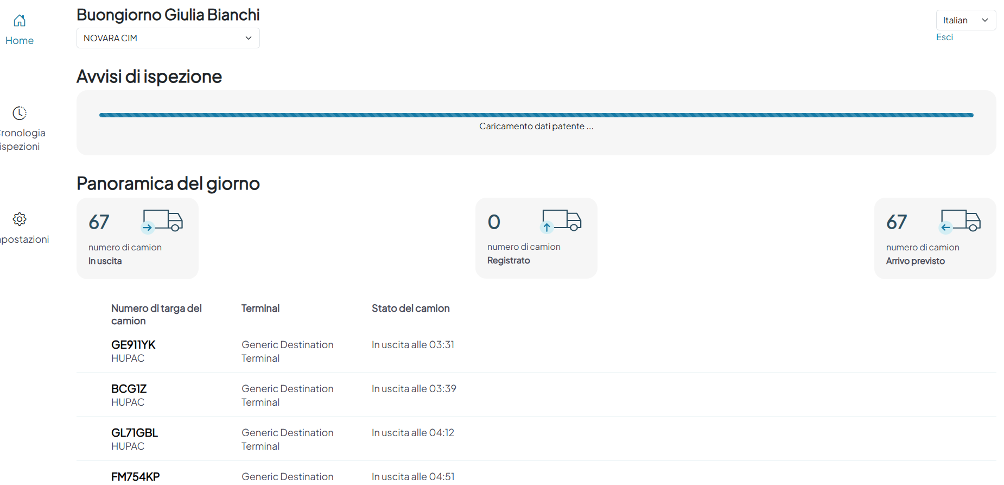
The KEYSTONE web application was used by law enforcement authorities to support inspection activities. It provides access to vehicle, driver, and goods-related data and is available in multiple languages. For the Novara pilot, the Italian version was used.
After login, the application displays a dashboard tailored to public enforcement authorities, presenting daily operational data such as the number of vehicles leaving the terminal, tractor registration numbers, exit times, and a compliance status indicator (regular/irregular).
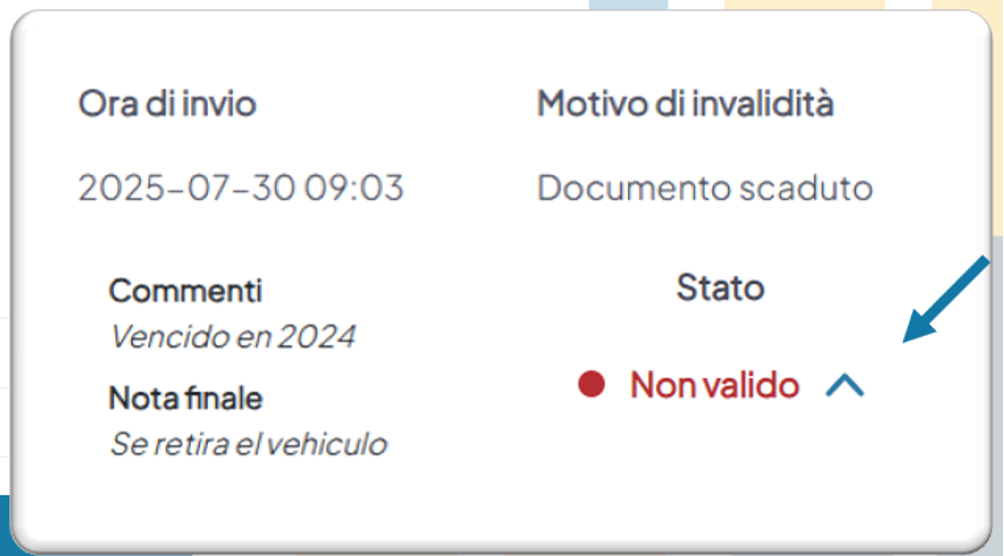
In the event of irregularities, the application specifies the reason, such as expired driving licences, excessive driving hours, lack of insurance coverage, or discrepancies between declared and actual goods.
Pilot Results and Key Outcomes
The pilot demonstrated the first operational interaction between an intermodal logistics terminal and public enforcement authorities using the KEYSTONE digital infrastructure. The main benefits relate to improved efficiency and optimisation of road safety and inspection procedures.
The system enables the timely identification of vehicles that may require inspection, allowing checks to be carried out near the terminal and before vehicles enter major motorway networks. This contributes to:
More efficient allocation of public enforcement resources
Reduced inspection times
Centralised access to vehicle and goods data through a single digital tool
Transport operators also benefit from improved operational planning and fleet monitoring. By identifying potential irregularities in advance, operators can take corrective actions and reduce the risk of roadside inspections.
Stakeholder Feedback
Feedback was collected from both public enforcement officers and drivers involved in the pilot:
“The application is simple and intuitive. If adopted more widely, it would support more effective planning of inspections and better use of resources by focusing checks on non-compliant vehicles”
“The application allows us to better plan vehicle availability for collections and to identify potential irregularities in advance. This helps ensure safe transport operations and reduces the risk of being stopped during the journey”
Author: Massimo Arnese, CIM - Novara Interport