KEYSTONE Partners Drive Digital Transport Innovation at Steering Committee in Brussels
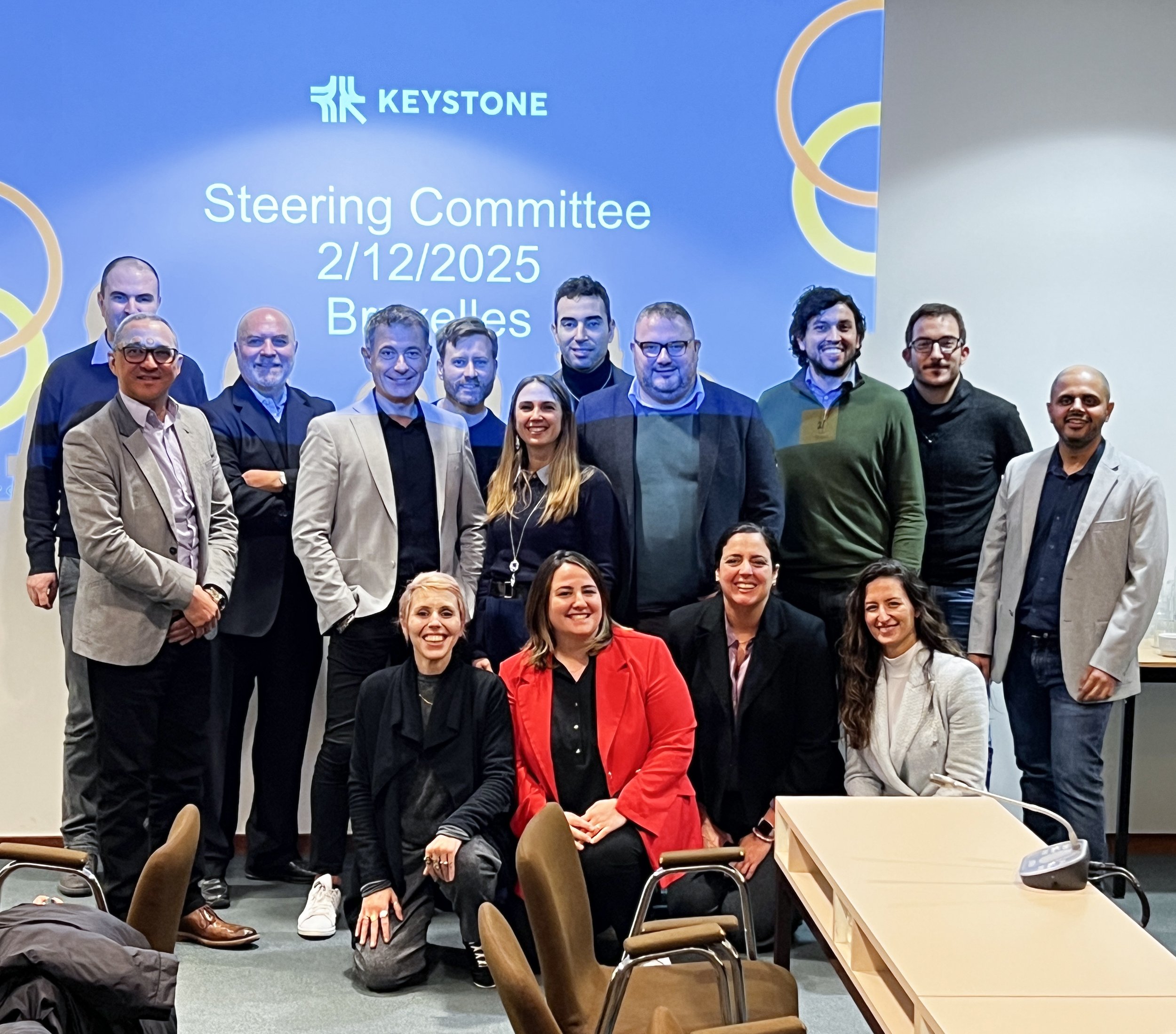
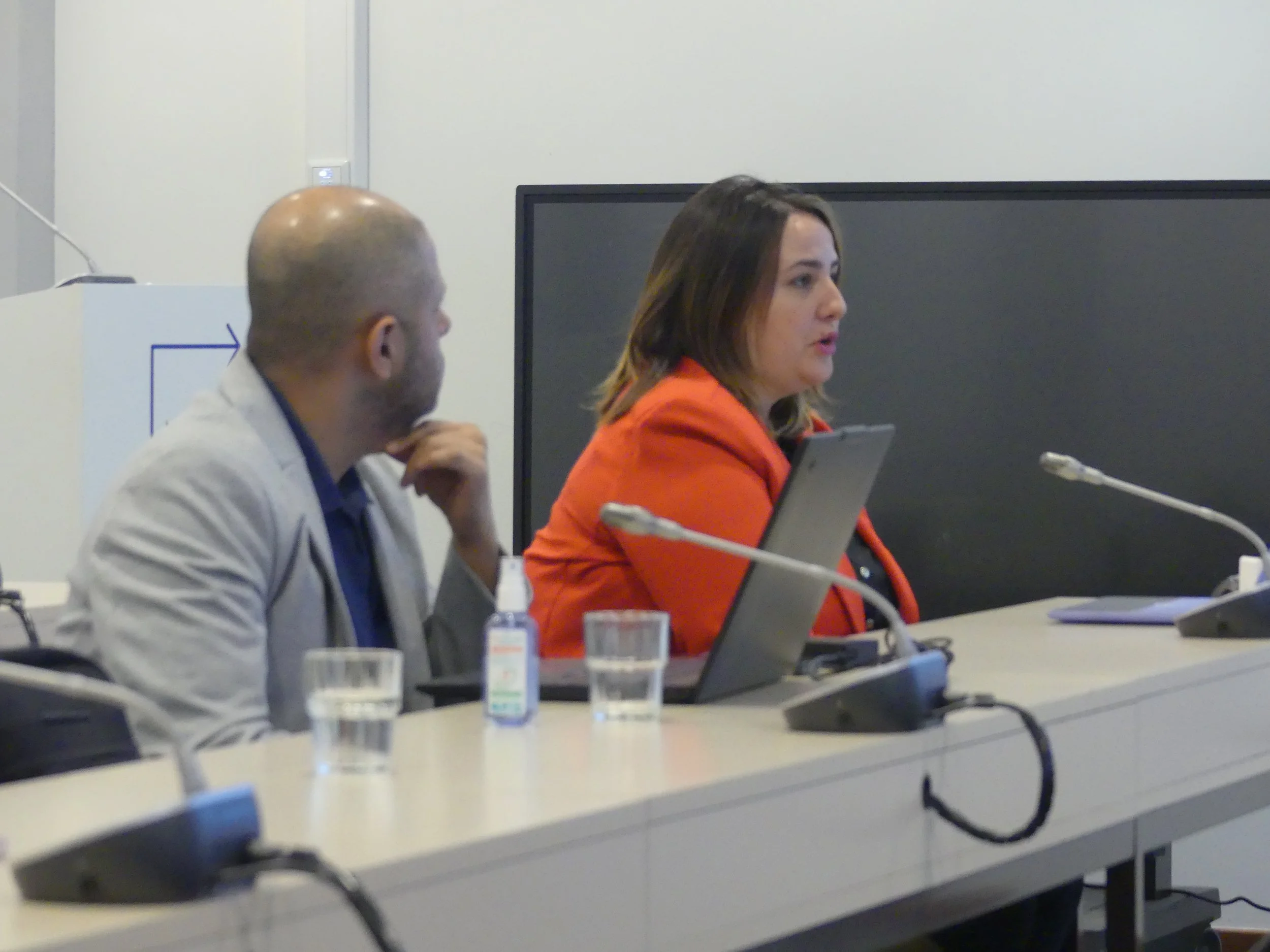
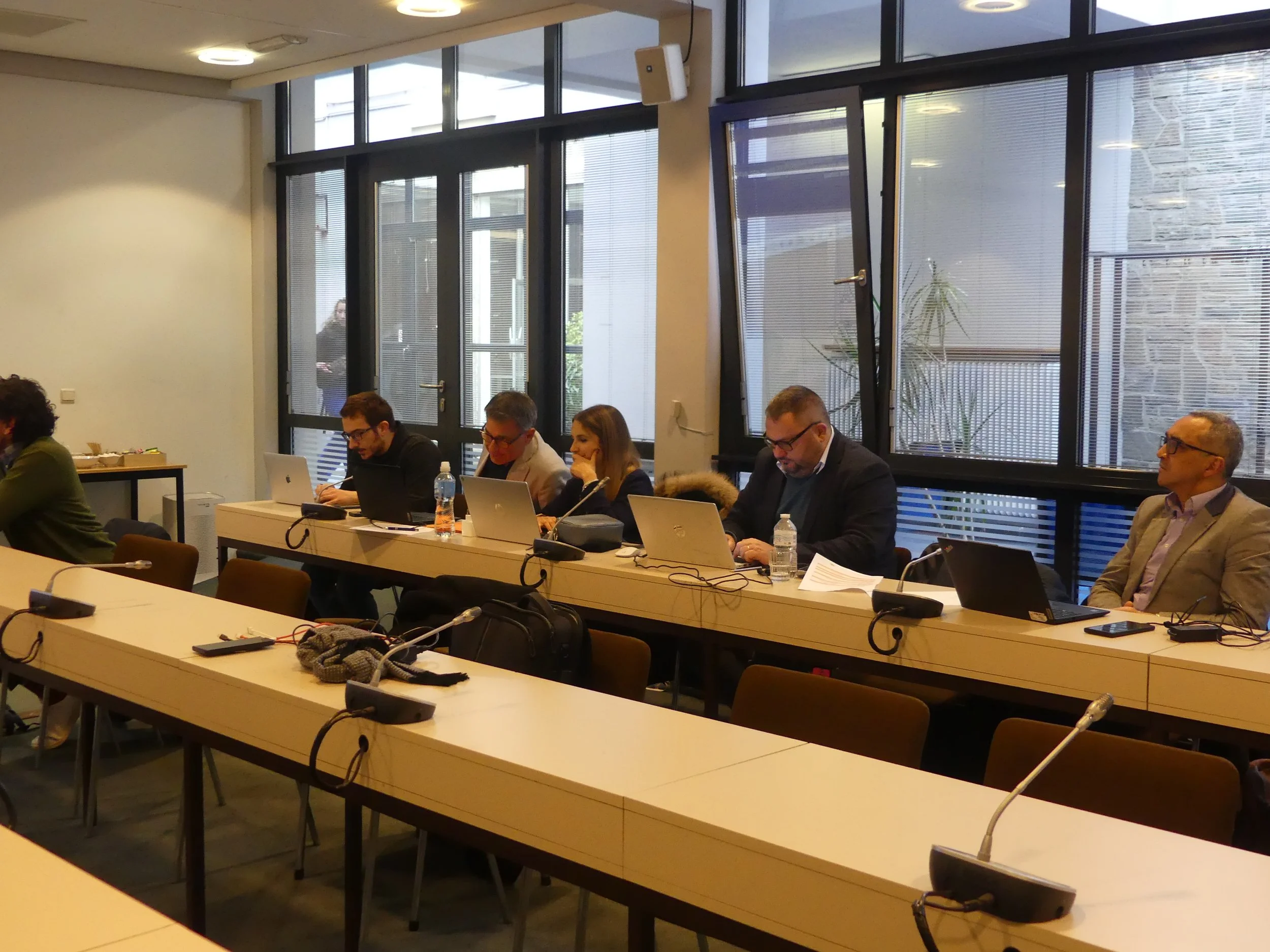
KEYSTONE Project Partners at the Steering Committee Meeting in Brussels, Belgium, in December 2025.
From 2 to 3 December 2025, KEYSTONE project partners united for an in-person Steering Committee meeting, sharing the latest progress and results, as the KEYSTONE project approaches its conclusion in Brussels, Belgium. The meeting was hosted by CORTE, the KEYSTONE project partner, and brought back nice memories for all participants, as it took place in the same venue where the project’s kick-off meeting was held.
As KEYSTONE moves toward completion, partners dedicated the first day to the results of the WP4 - Piloting, reviewing the two pilot activities that were finalised in November 2025 (Month 30).
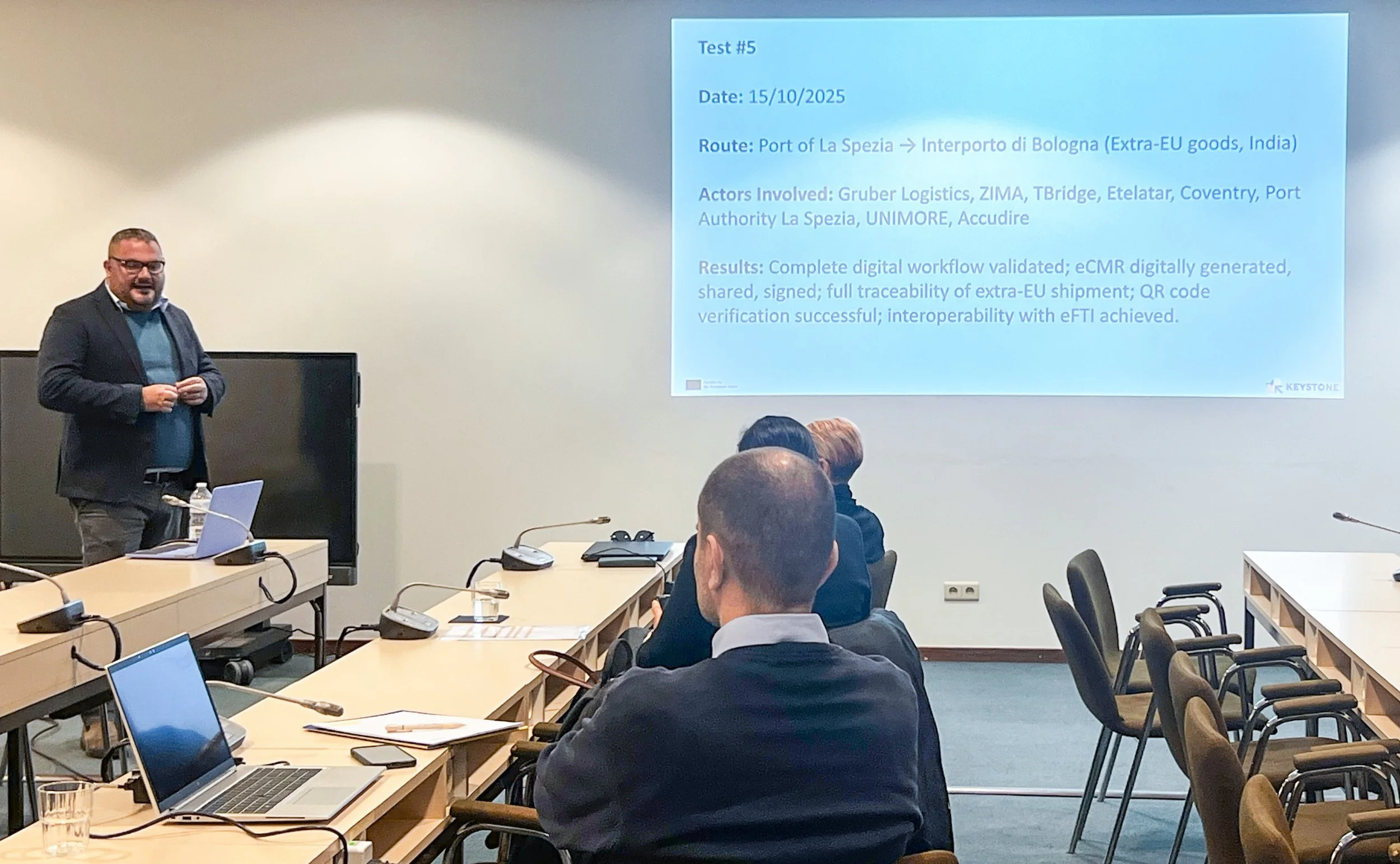
On day 1, Fabrizio Borgogna from Gruber Logistics, leader of the road transport pilot, presented the outcomes of the five road transport tests conducted between July and October 2025. These tests demonstrated significant advances in transport data exchange between the Port of La Spezia and inland logistics hubs.
Early trials revealed missing vessel trip data and geolocation limitations that hindered the automatic transmission of ETA and cargo information. On 11 September 2025, test 3 was conducted, marking a turning point by successfully transmitting ETA and cargo data automatically. This was followed by Test 4 on 23 September 2025, which achieved full system interoperability. The fifth and final pilot test, implemented on 15 October 2025 in collaboration with the eFTI4EU project, marked the first paperless freight transport pilot. During this test, eCMRs were generated, shared and signed electronically; full traceability of extra-EU cargo was demonstrated; and QR-code verification operated seamlessly across platforms.
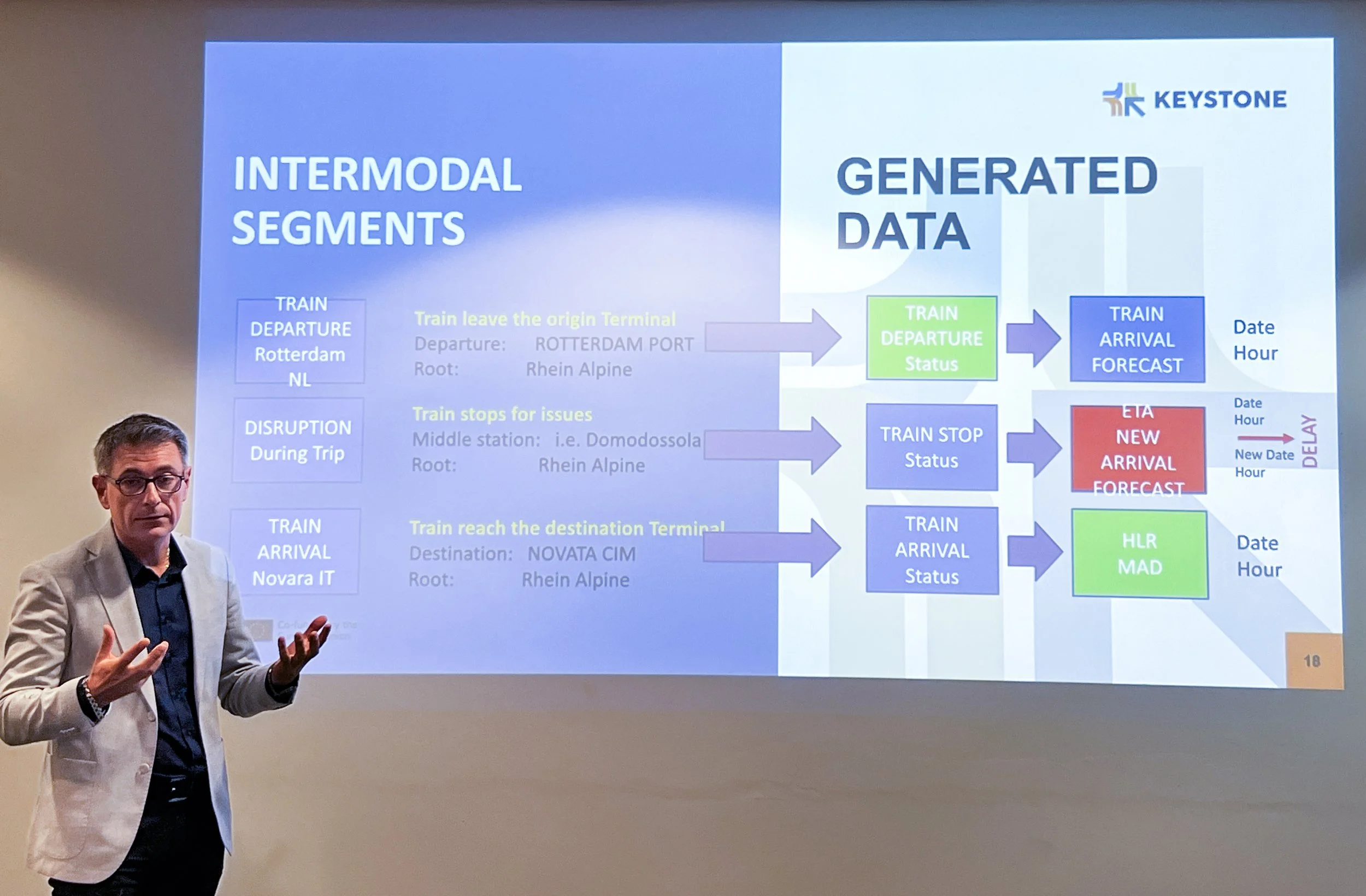
Following this, Massimo Arnese from CIM - Interporto di Novara, presented the results of the intermodal pilot activities involving logistics operators and enforcement authorities along the Port of Rotterdam, the Rhine–Alpine rail corridor and the Novara terminal. Using the WOLF terminal management platform and the KESTONE web app, the pilot validated the integration of real-time rail data with terminal operations and control procedures. More than 15 pilot tests were carried out, including over five involving the Italian enforcement authorities.
It was very interesting for the KEYSTONE partners to hear the feedback and future recommendations that the end-users shared with the pilot leaders, regarding the web app’s usability.
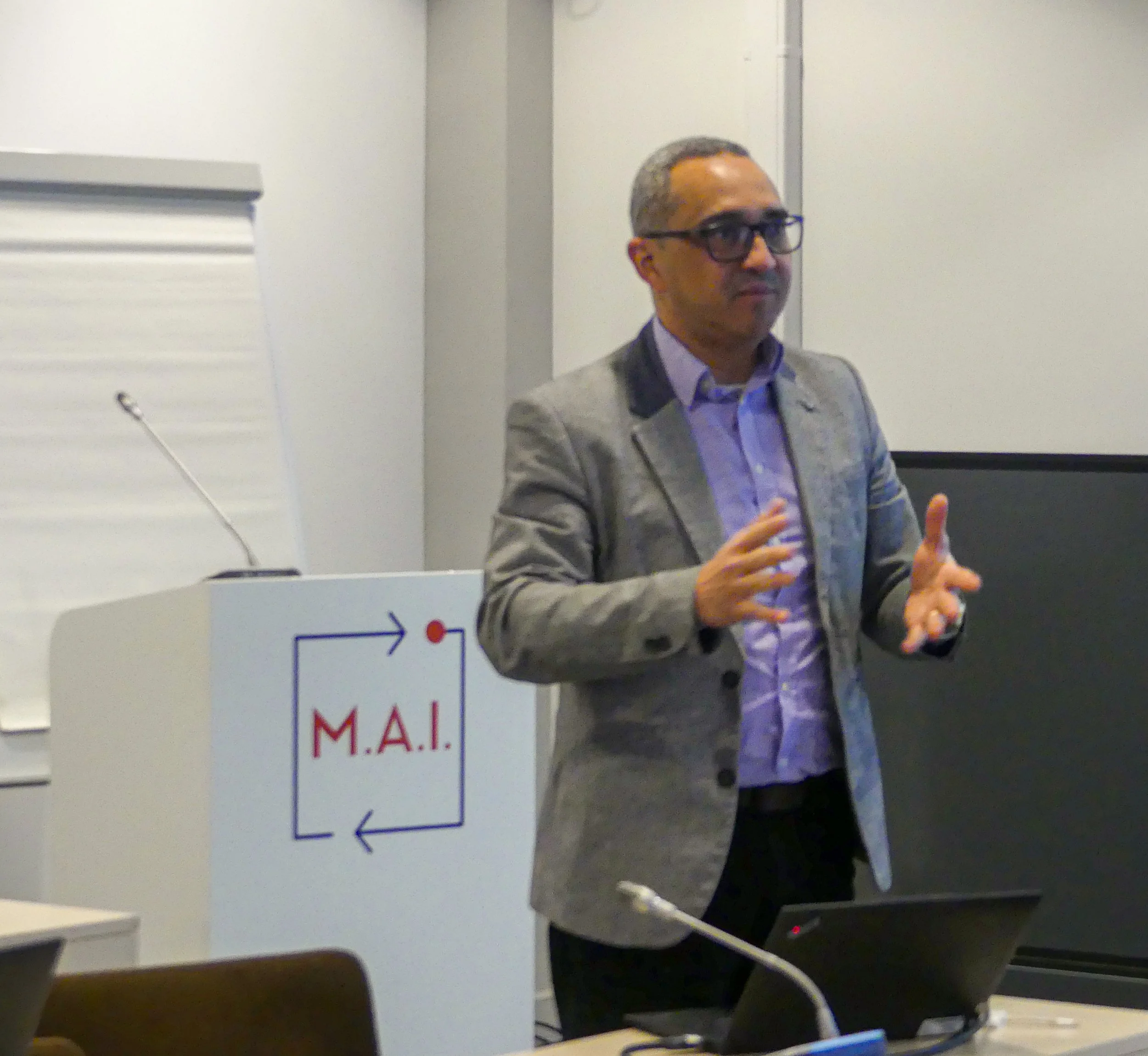
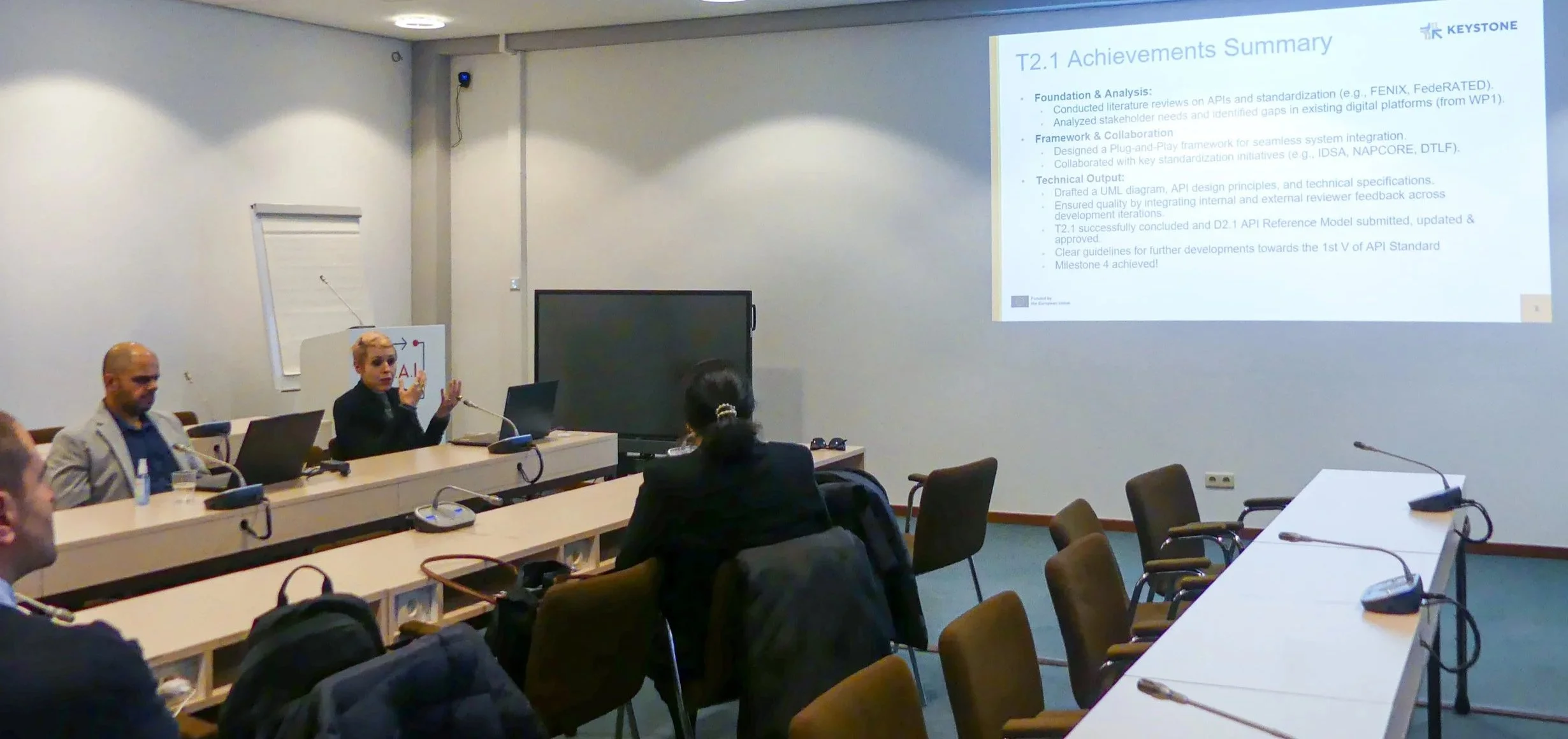
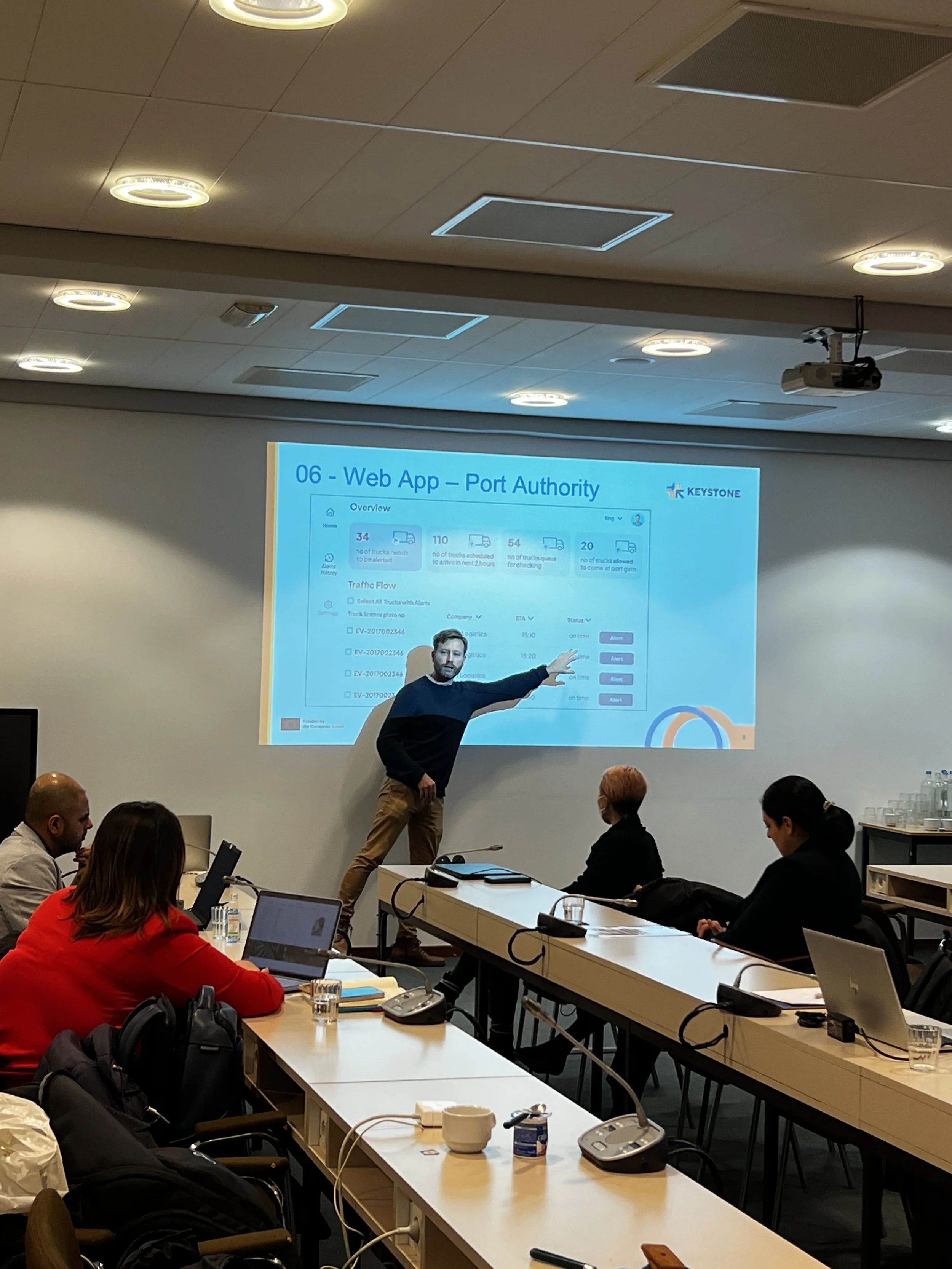
The meeting also included insights from concluded work packages, including insights from WP1 - Gap Analysis and State-of-the-Art presented by Alexeis García Perez from AGIM. Discussions also included findings and achievements from WP2 - Development of an implementation framework for Plug & Play, dedicated to the methodology of the KEYSTONE web application, presented by Zoe Petrakou from Aethon Engineering. Finally, Jesús Martinez Cuadrado from Etelätär Innovation, leading the WP3 -Toward Plug & Play Implementation, presented the interfaces of the KEYSTONE web app. All concluded work packages played a key role in establishing the baseline for developing the KESTONE web application.
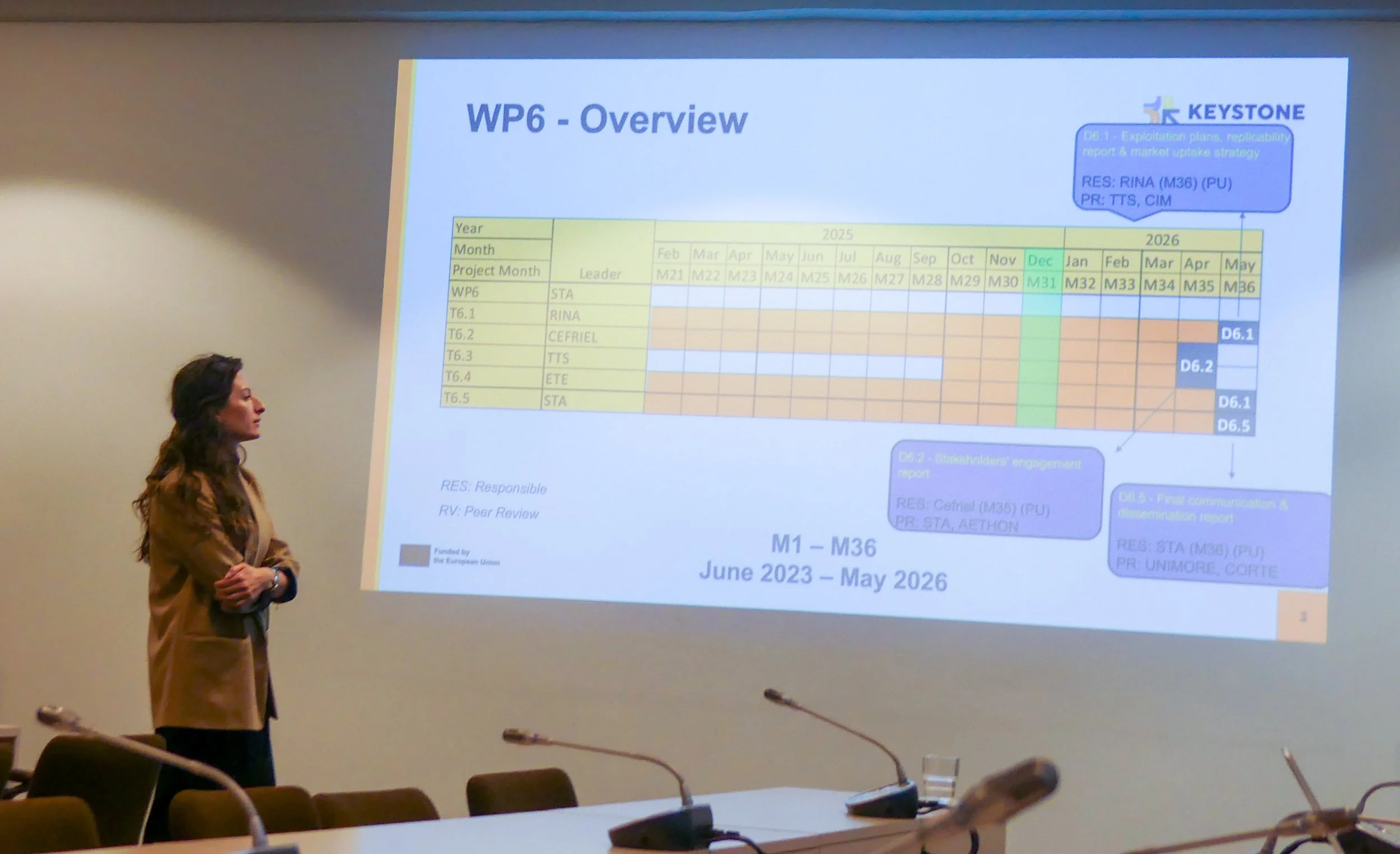
On the second day, partners focused on the evaluation activities of the web application, following the completion of all piloting activities. The current updates of the WP5 - Evaluation, Guidelines and Ethical Impact were presented by Giulia Renzi from UNIMORE. Additionally, Eftychia Koliou from Smart Transportation Alliance, presented the next plans for WP6 - Communication, Dissemination and Exploitation strategy, ensuring that the results are reaching the targeted audiences, as well as preparations for the final event, aiming to present how KEYSTONE has impacted transport, logistics operators, and enforcement authorities through its web application that simplifies data exchange at critical points, including cross-border operations.
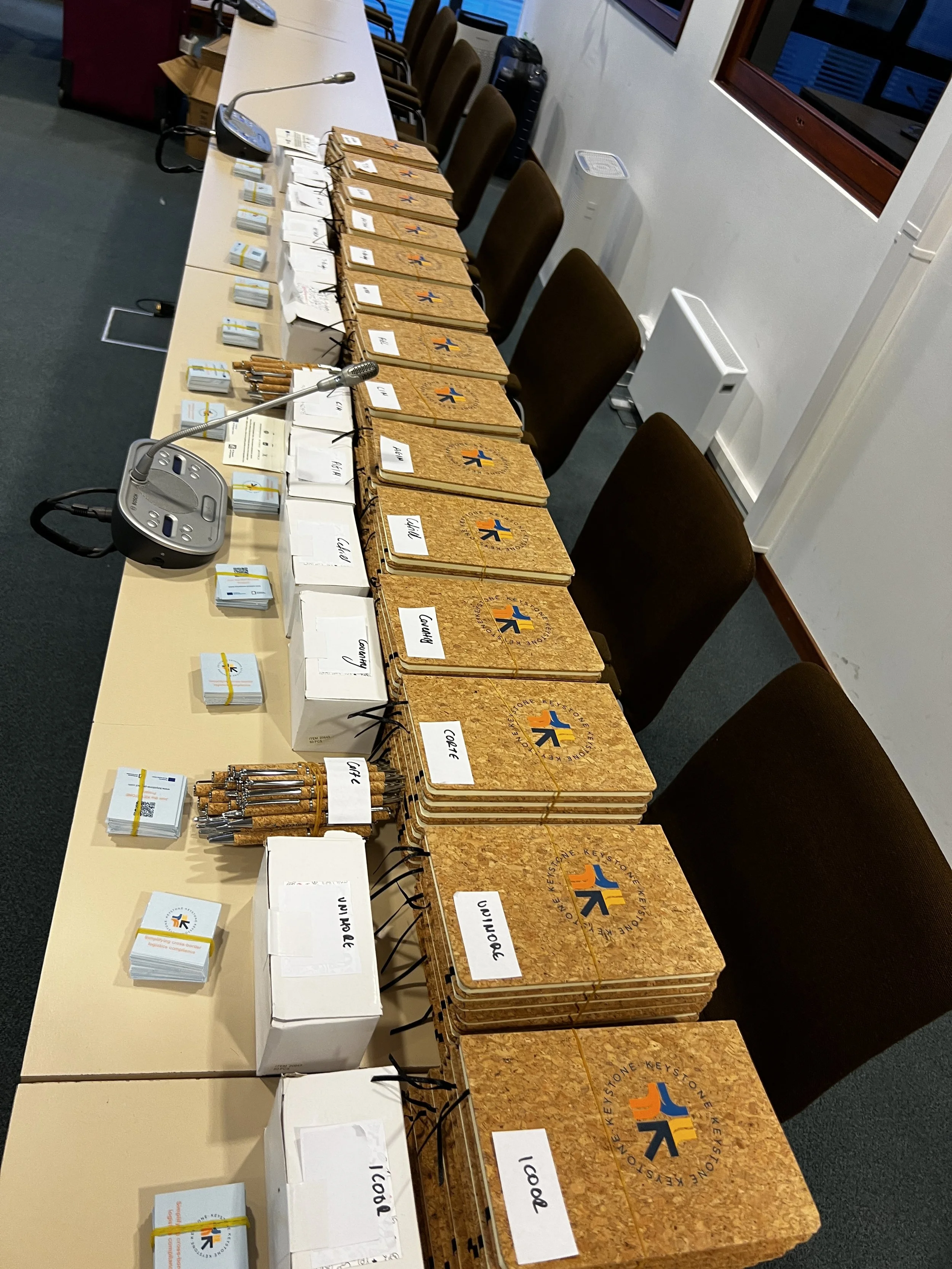
Finally, all partners also received the second edition of the dissemination package, which included a notebook, pen and business cards designed to enhance the project’s visibility.
Stay tuned, as the KEYSTONE partners consortium will share the project’s outcomes, as well as the insights from the pilot activities!